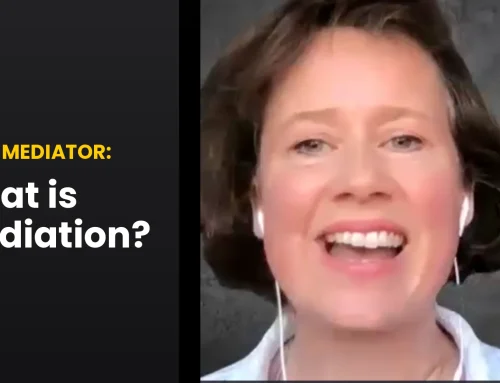
Health and care mediation is a specialism, distinct from commercial or divorce mediation. Arabella Tresilian explains what sets it apart – the legal frameworks involved, why the mediator’s own experience matters, and how it supports workplace disputes too.
This is the second video in my #AskAMediator series, where I answer the questions I’m asked most often about mediation — this time from the people who might refer a case to me, or who are living through a health, care or workplace dispute themselves: lawyers, local authorities, social care professionals, social workers, NHS service managers, Court of Protection professionals, family members, patients, and employees.
If you missed the first video, What Is Mediation?, start there for the basics. This one goes a level further: why health and care mediation is its own specialism, and what that means in practice.
How is health and care mediation different from other kinds of mediation?
Health and care mediation is a specialism, unlike commercial mediation or divorce mediation. It’s focused on the disagreements that arise in health and care matters — disputes that require a certain sensitivity, and a certain knowledge of the subject matter, that generalist mediation doesn’t always call for.
What kinds of disputes does health and care mediation cover?
Health and care disputes may involve the Mental Capacity Act 2005, Lasting Powers of Attorney, safeguarding, or Court of Protection processes. These are specific, technical areas — but they’re applicable to any of us. I’m speaking here about the UK context throughout.
Does a health and care mediator need to be a doctor or healthcare professional?
No — a mediator in this arena doesn’t need to be a doctor or a healthcare professional, but does need fluency and understanding of the settings involved. That means understanding some of the experience of being a professional, a patient, or a family caregiver, in order to grasp the intricacies of these cases — and how deeply they can touch us, because health and care matters are often really crucial to us.
Can mediation help with workplace and employment disputes too?
Yes. We also support workplace and employment disputes involving somebody with a disability or a health condition. There’s a kind of Venn diagram where workplace difficulties and the need for accessibility and reasonable adjustments overlap, and mediation can help by supporting the resolution of disagreements where health and care matters intersect with workplace and employment matters.
What does it mean for mediation to be trauma-informed and culturally responsive?
It means the process is designed around the reality that everyone involved carries their own cultural background, and possibly their own experience of trauma. There’s now some really good research on the health inequalities we see across the UK and beyond, so as soon as a dispute has a health or care element, we need to be aware of that. Health and care mediation should be trauma-informed and culturally responsive as a result — the process is designed to be flexible and supportive of anyone’s additional needs, which, frankly, in these settings can apply to any of us, including professionals.
Does mediation replace legal or safeguarding processes?
No — health and care mediation sits alongside statutory processes, like complaints procedures, safeguarding reviews, and Court of Protection proceedings, rather than replacing them. That means the mediation itself has to be handled with those boundaries in mind throughout.
How do I get in touch about a dispute?
If you have a dispute or disagreement — whether legal or interpersonal — where health, care, disability or a health condition is an important part of it, get in touch. We can help by providing a process that allows sensitive conversations to happen, and future-focused agreements to be made.
Arabella Tresilian is the founder of Health and Care Mediation. Find out more or book a scoping conversation →